Appeals Committee
Formal appeals body for council decisions.
Have a question about this committee?
You can submit questions to be asked at committee meetings or request to speak at a meeting.
The Appeals Committee is a formally constituted body within Ambridge District Council, established to provide a fair, independent, and structured forum for hearing and determining formal appeals arising from non-planning decisions made by the council or its officers. It stands as an essential pillar of good governance — ensuring that residents, employees, and other affected parties have a meaningful right of recourse when they believe a decision has been made incorrectly, unfairly, or without due regard to the relevant facts and circumstances.
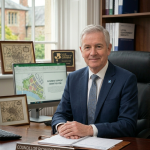
Chaired by Robert Brooks, the Appeals Committee operates with strict impartiality. Members sitting on the committee are required to approach each case without predetermination, weighing the evidence presented by all parties before arriving at a reasoned and defensible conclusion. The committee’s role is not to revisit policy or relitigate political decisions — it is to ensure that the processes and rules governing individual decisions have been correctly and fairly applied, and where they have not, to provide an appropriate remedy.
The scope of the committee’s jurisdiction covers a broad range of non-planning matters, which may include — but is not limited to — appeals against licensing decisions, disciplinary and employment-related appeals, complaints about the application of council policies to individual cases, and other administrative determinations where a right of appeal has been conferred by statute or council procedure. This breadth of remit means the committee plays a vital role in maintaining public confidence in the council’s decision-making processes.
Operating under committee code AMB-APP-005 as an Executive-type committee within the 2024 municipal year, the Appeals Committee requires a quorum of four members to conduct valid proceedings. This ensures that no appeal is heard or determined by fewer members than the minimum necessary to guarantee a balanced and considered judgment. Meetings are convened as and when appeals are received, rather than on a fixed schedule, reflecting the reactive and case-specific nature of the committee’s work.
As a top-level committee with no parent body, the Appeals Committee exercises its functions independently, free from the influence of the committees or officers whose decisions may themselves be the subject of an appeal. This structural independence is fundamental — without it, the integrity of the appeals process would be undermined, and the right of challenge that residents and staff are entitled to would be rendered meaningless.
Residents or parties who believe they have grounds for appeal are encouraged to review the council’s appeals procedures and submit their case in accordance with the relevant timescales and requirements. The committee is committed to ensuring that every appeal is heard thoroughly, decided fairly, and communicated clearly.